Passer aux informations produits
1 de 3

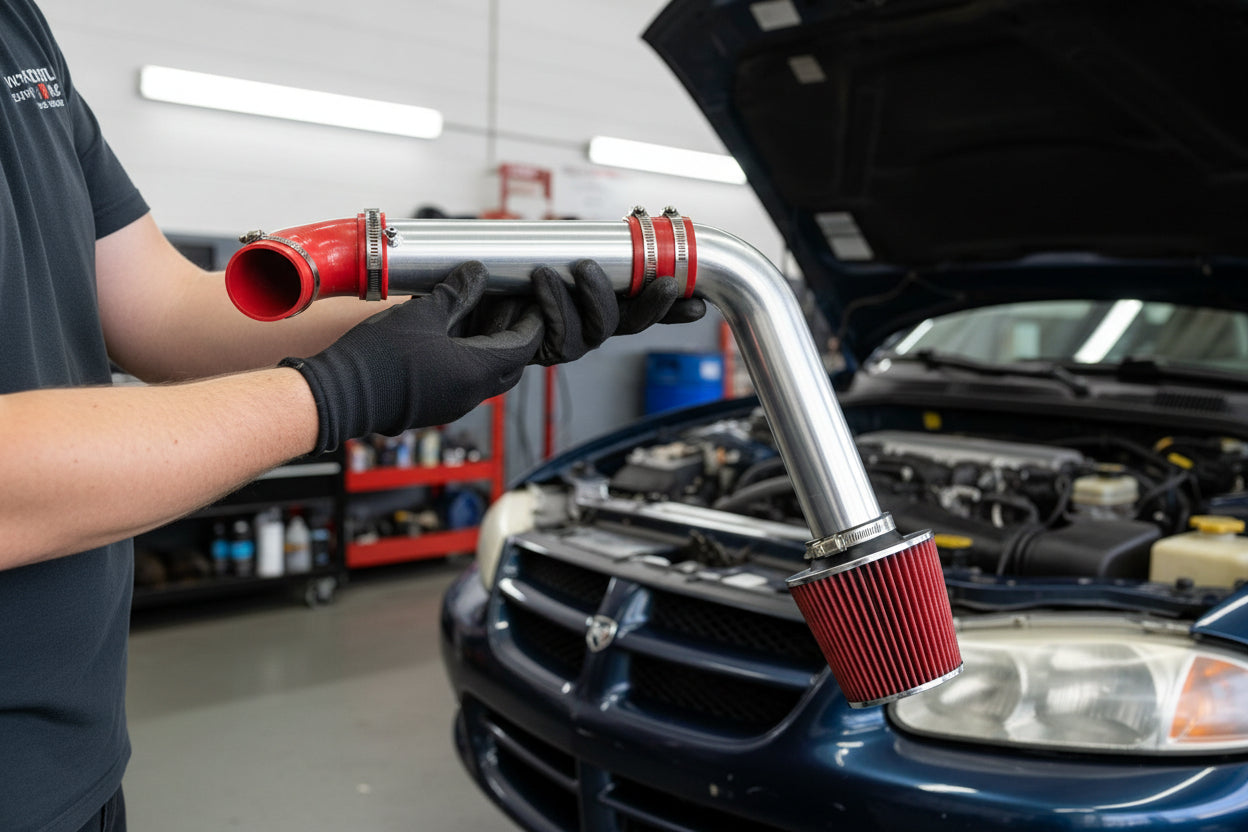
Admission d'air froid pour Dodge Avenger (1995-2000) moteurs 2.0L et 2.5L


Prix habituel $90.99
Prix promotionnel $90.99 Prix habituel
Frais d'expédition calculés à l'étape de paiement.

  • Ajustement garanti
  • Approuvé par des milliers de personnes
  • Garantie à vie

Vous le voulez bientôt ? Commandez dès maintenant !

I18n Error: Missing interpolation value "end_date" for "Se termine le {{ end_date }}"

Avez-vous déjà eu l'impression que votre Dodge Avenger retenait son souffle lorsque vous essayiez d'accélérer ? C'est souvent dû au système d'admission d'origine, qui étouffe la puissance potentielle.

Système d'admission d'air froid haute performance pour Dodge Avenger (1995-2000) moteurs 2.0L et 2.5L

Le système d'admission d'air d'origine de la Dodge Avenger (1995-2000), qu'elle soit équipée du moteur 2.0L L4 ou du V6 2.5L, a été conçu pour privilégier le silence et la rentabilité, au détriment des performances. Il en résulte souvent un conduit d'air complexe, des chicanes restrictives et un petit boîtier de filtre qui bride le moteur, surtout lorsqu'on recherche plus de puissance. C'est comme essayer de courir un marathon en respirant avec une paille.

Ce système d'admission d'air froid à haut débit est conçu pour résoudre précisément ce problème. En remplaçant les composants d'origine restrictifs par un conduit d'admission profilé en aluminium T-304 et un filtre haute performance, le moteur de votre Avenger peut enfin respirer pleinement. Le résultat ? Non seulement une puissance maximale accrue, mais aussi une nette amélioration de la réactivité de l'accélérateur et une courbe de couple plus large et plus exploitable sur toute la plage de régime. Vous sentirez la différence à chaque accélération.


Pourquoi vous avez besoin de cette mise à niveau

  • Réponse plus vive à l'accélération : élimine les points morts et les hésitations associés aux boîtes à air d'origine, vous offrant une connexion immédiate et satisfaisante entre votre pied et la puissance du moteur.
  • Couple plus exploitable : optimise la vitesse du flux d’air pour améliorer l’efficacité de la combustion, offrant une augmentation palpable de la puissance de traction que vous remarquerez au quotidien et lors des dépassements sur autoroute.
  • Amélioration de la puissance à haut régime : grâce à un apport constant et plus dense d’air froid, votre moteur peut produire une énergie plus explosive, ce qui se traduit par des gains de puissance mesurables là où cela compte.

Spécifications techniques

Ajustement Dodge Avenger 1995-2000, moteurs 2.0L L4 et 2.5L V6
Statistiques de l'usine 2,0 L : 140 ch / 176 Nm ; 2,5 L : 163 ch / 230 Nm
Installation Modérée / 1,5 à 2 heures

Remplace ces applications OEM

Véhicules compatibles :

  • Dodge Avenger 1995-2000 (moteur 4 cylindres en ligne de 2,0 L)
  • Dodge Avenger 1995-2000 (moteur V6 2,5 L)

Améliorez votre Dodge Avenger dès aujourd'hui

Ne laissez pas une admission d'air d'origine restrictive brider les performances de votre Avenger 2.0L ou 2.5L. Achetez en toute confiance : nous vous proposons les meilleures pièces d'admission d'air froid, avec une livraison rapide et un service client expert.


Cote de sécurité du moteur
Difficulté


Ajustement

Faire

Esquiver

Cylindrée

  • 2,0 L
  • 2,5 L

Année

  • 1995
  • 1996
  • 1997
  • 1998
  • 1999
  • 2000

Installation

The Wrench Time

  • Estimated Time: 45-60 Minutes
  • Difficulty: 3/10 - A straightforward driveway bolt-on for the 1995-2000 Dodge Avenger 2.0L 2.5L, as long as you respect the 25-year-old factory plastics.

Tools You Will Need

  • 10mm socket and ratchet (For battery and factory airbox bolts)
  • 12mm socket and extension (For factory lower resonator mounting bolts)
  • 8mm nut driver or flathead screwdriver (For hose clamps)
  • Panel popper tool (For removing plastic wire harness clips)
  • Silicone spray lubricant (To safely remove the IAT sensor)
Mechanic’s Pro Tip (The "Gotcha"):
If you frequent the ASOG (Avenger Stratus Owners Group) forums, you know the legendary headache of the factory accordion intake hose. After decades of under-hood heat on these 420A and 6G73 engines, that rubber turns to brittle plastic. Do NOT aggressively yank the IAT (Intake Air Temperature) sensor out of the factory tube. The plastic cage protecting the sensor tip will snap off and fall right into the hose. Hit the base of the sensor with silicone spray, let it soak for two minutes, and gently twist it out.

Phase 1: Removing the Factory Part

  1. Disconnect the Battery: Always start by disconnecting the negative battery terminal using a 10mm wrench to prevent check engine lights and clear the ECU’s long-term fuel trims for the new airflow.
  2. Unplug the IAT Sensor: Locate the IAT sensor on the factory intake pipe. Depress the locking tab and unplug the wiring harness. Use a panel popper to free the harness wire from the airbox housing so it doesn’t get snagged.
  3. Remove the Valve Cover Breather Hose: Carefully twist and pull the factory PCV/breather hose from the intake tube. If the hose is dry-rotted, replace it with standard 3/8-inch vacuum line rather than trying to tape it up.
  4. Loosen the Throttle Body Clamp: Take your 8mm nut driver (or flathead) and loosen the factory worm-gear clamp securing the rubber intake hose to the throttle body.
  5. Unbolt the Factory Airbox and Resonator: Use your 10mm socket to unbolt the upper airbox housing. Follow the plastic piping down into the fender well and use a 12mm socket with a long extension to remove the bolts holding the bulky lower factory resonator box. Yank the entire factory intake assembly out of the engine bay.

Phase 2: Installing the Cold Air Intake for 1995-2000 Dodge Avenger 2.0L 2.5L

  1. Install the Throttle Body Coupler: Slide the provided silicone reducer coupler onto the throttle body. Slide two new hose clamps over the coupler, but only tighten the throttle body side down firmly using your 8mm nut driver. Leave the intake-pipe side loose.
  2. Transfer the IAT Sensor: Grab the factory IAT sensor you carefully removed earlier. Push the supplied rubber grommet into the pre-drilled hole on your new Cold Air Intake pipe. Lightly lubricate the grommet with silicone spray, and gently twist and push the IAT sensor into place until seated flush.
  3. Route the New Intake Pipe: Carefully snake the new aluminum intake pipe down toward the fender well opening, aligning the top end into the silicone throttle body coupler. Secure the pipe’s welded mounting bracket to the factory resonator mounting hole on the chassis using your 12mm socket and the supplied hardware.
  4. Mount the Cone Filter and Hoses: Attach the high-flow cone filter to the lower end of the intake pipe in the fender cavity, tightening the clamp with an 8mm nut driver. Connect the provided silicone breather hose from the engine valve cover to the welded nipple on the new intake tube. Reconnect the IAT sensor wiring harness until it clicks. Tighten the remaining throttle body clamp.
  5. Execute the ECU Relearn Procedure: Reconnect the negative battery terminal with your 10mm wrench. Start the vehicle. Do NOT touch the gas pedal for exactly 20 seconds. Let the car idle; the ECU needs this time to calibrate to the massive increase in unrestrictive airflow without throwing a lean code. Check for any whistling sounds indicating a vacuum leak, then shut the hood.

Disclaimer: This is a general guide provided for the 1995-2000 Dodge Avenger 2.0L 2.5L. Always refer to your factory service manual for exact torque specifications and safety procedures.

Garantie

Tous nos produits sont couverts par notre garantie à vie limitée . Nous garantissons leur qualité. [ Voir conditions ]

Admission d'air froid pour Dodge Avenger (1995-2000) moteurs 2.0L et 2.5L

$90.99